 Image 1 of 5
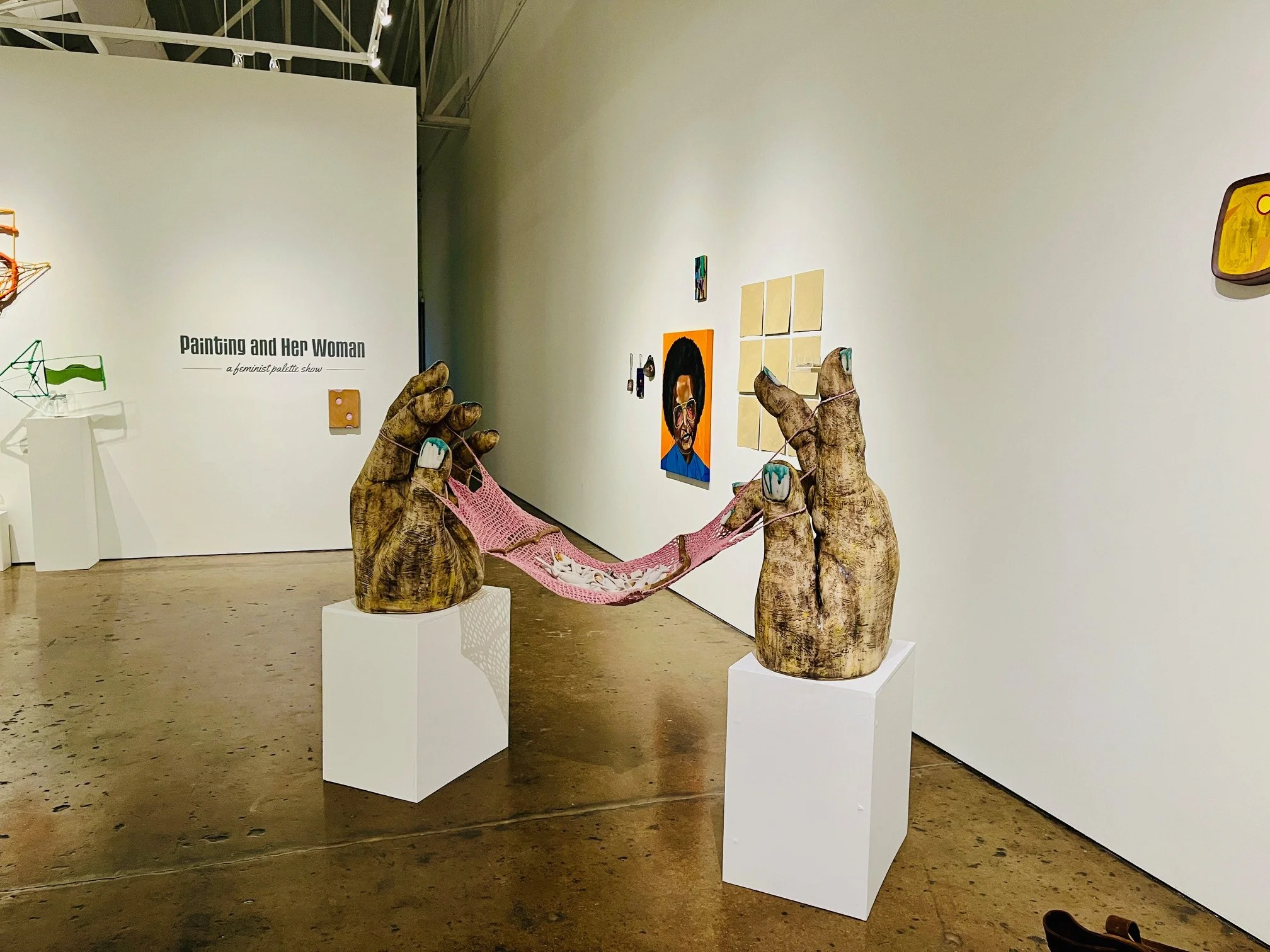 Image 2 of 5
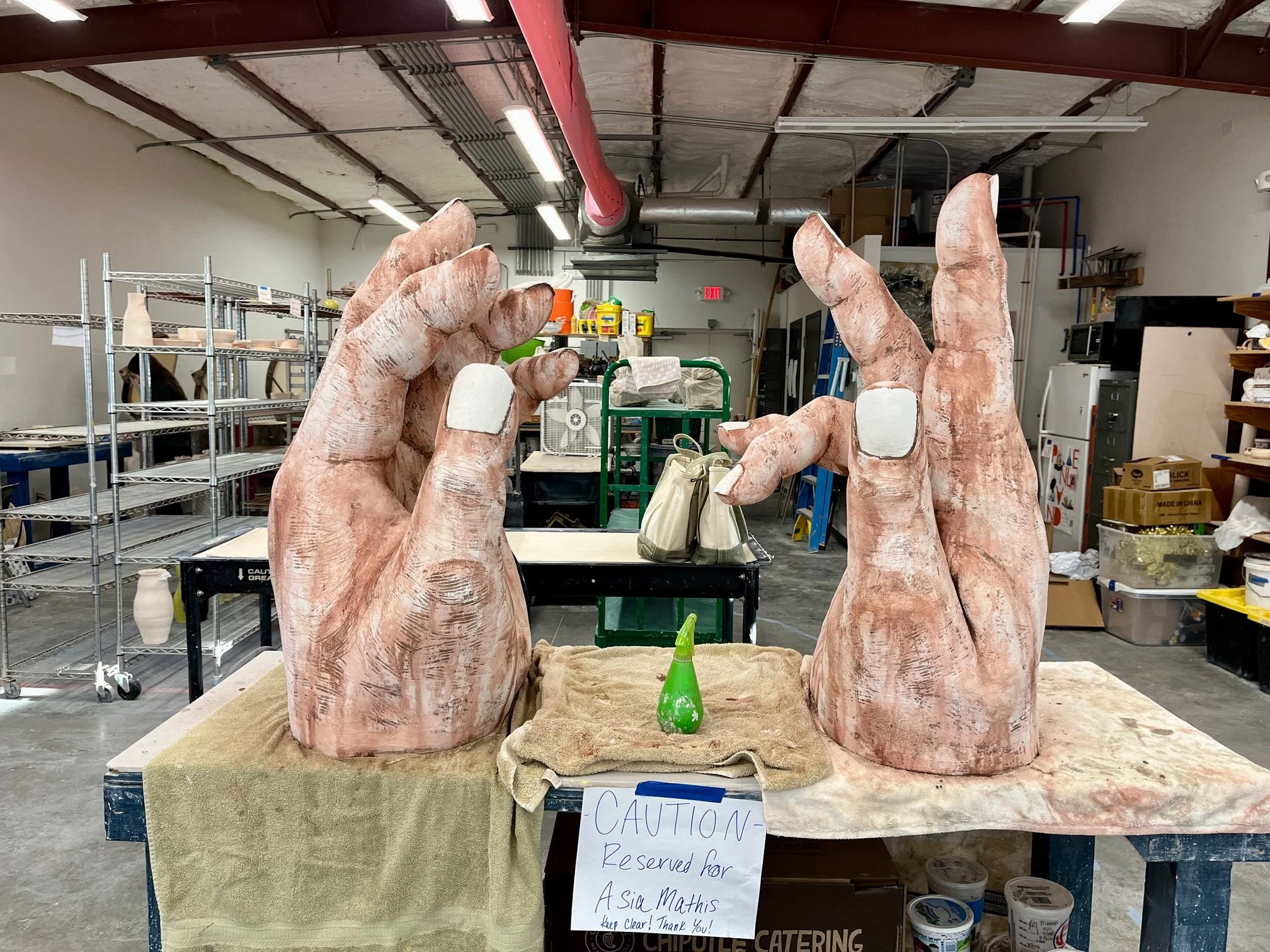 Image 3 of 5
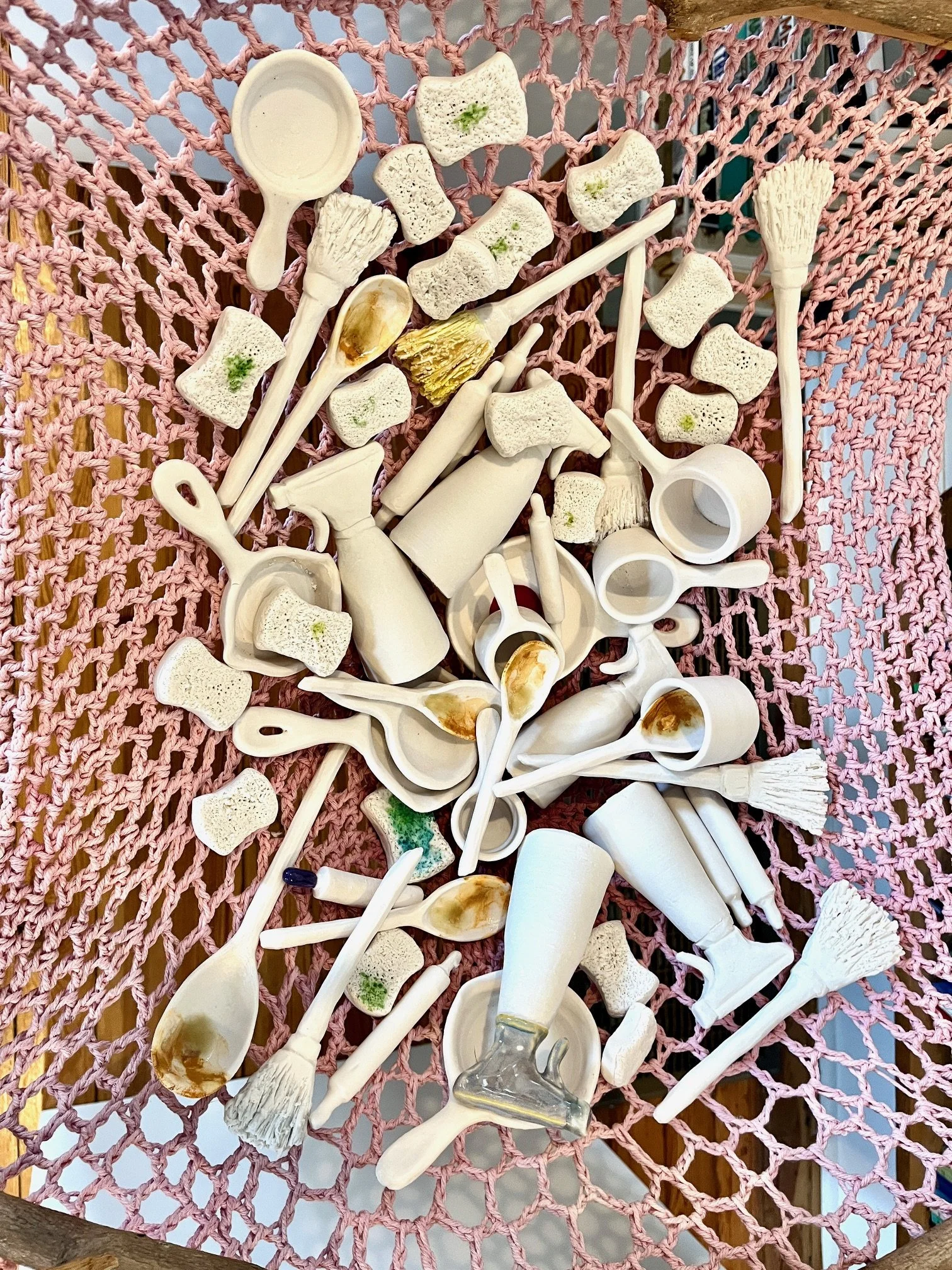 Image 4 of 5
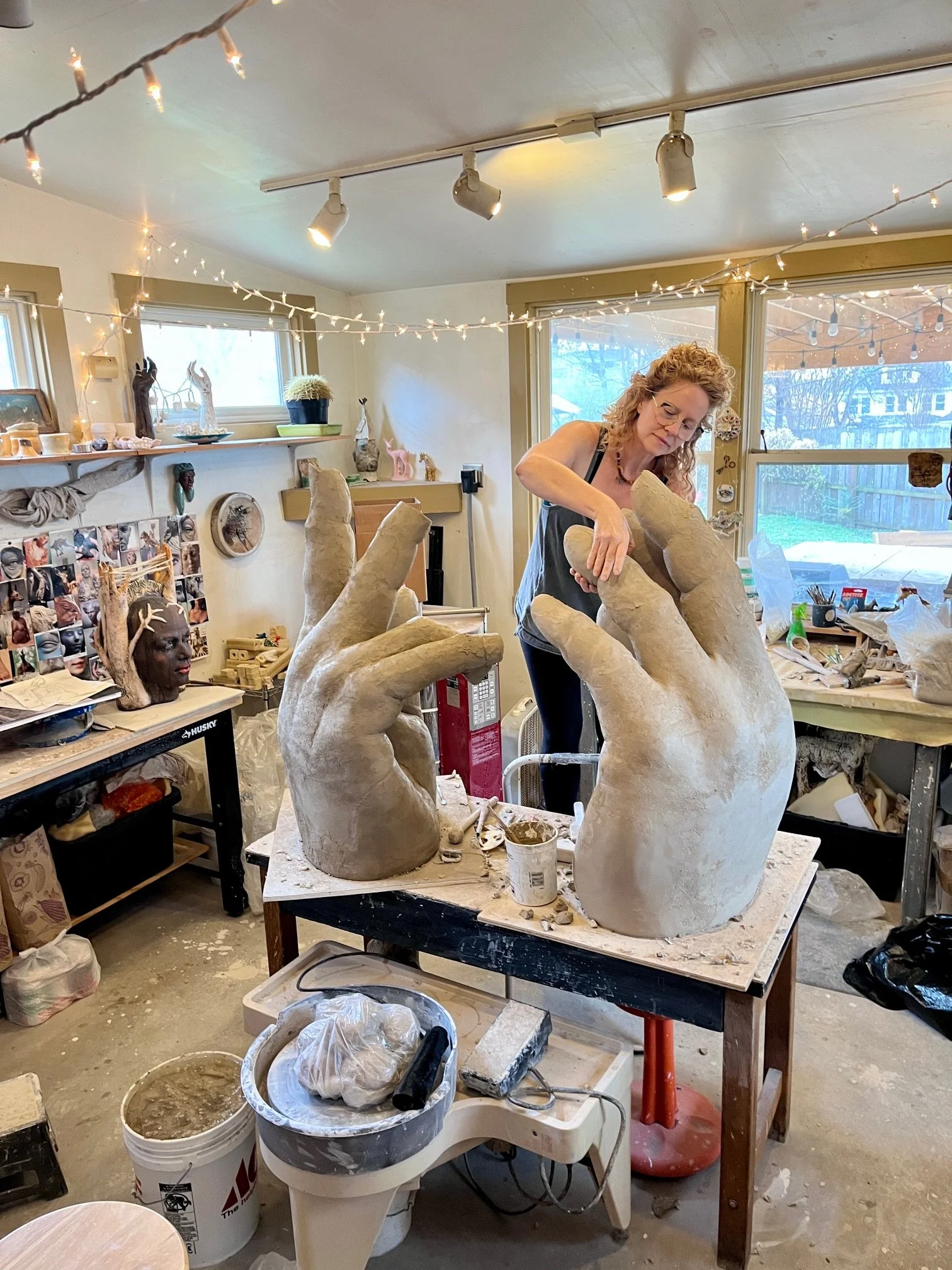 Image 5 of 5
87” x 61'“ x 22” stoneware clay, porcelain, cotton, wood
Currently available through David Lusk Gallery as part of the “Painting and Her Woman” show curated by Jodi Hays
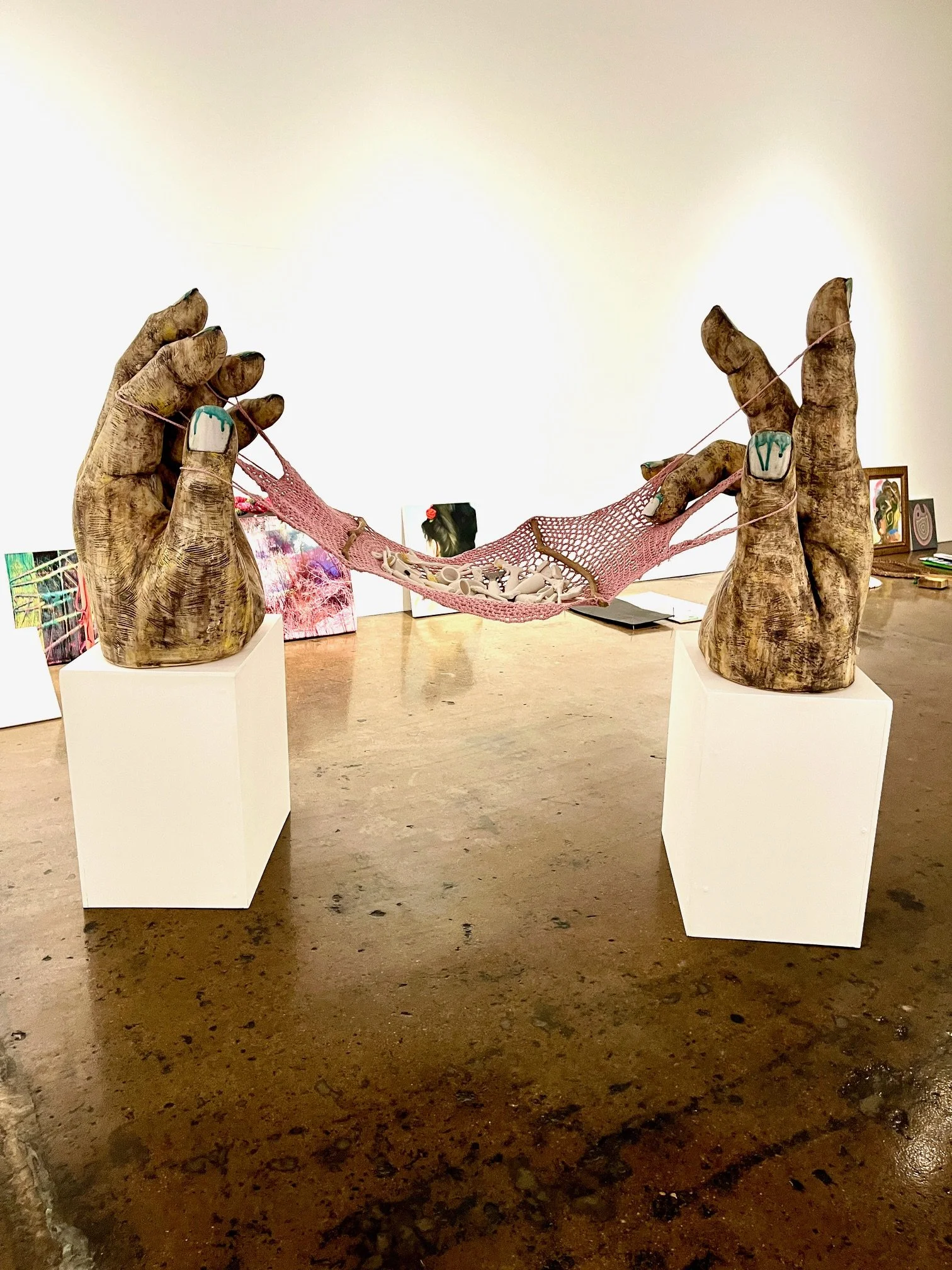
Domestic ghosts come in many forms- some are our long ago ancestors- women down the ages that I romantically envision washing clothes in the creek, weaving baskets, cooking porridge, and darning socks by firelight. Others are those “in-the-hand” things like sponges, spray bottles, pots and pans, brooms, rolling pins, spoons, etc., the list could go on and on. Some of these stay with us for years, and if you are like me you might actually have your grandmother's iron pans, or rolling pin. Others are more disposable- they come and go in the hundreds or even thousands throughout our lives. At the moment of use all of these items are important, just as the hands using them are. “Domestic Ghosts” refers not just to the past, but also our present, and the fact that so much of our labor goes unseen, it in itself can feel like a kind of ghost- the people around us sense that something has happened, someone was here, but they often do not acknowledge the actual work. These hands are large because they deserve, and demand, to be seen- they have been, and are the weavers of life. They are tired of playing small, and like a shaded tree finally allowed the joy of sunlight, they are growing into their own. The crocheted net between them is at once the holder of our labored history, and a remembrance of the handwork of those that came before us, the “small arts” that women were allowed. The domestic items inside the net are purposely pale, ghost like, bone like, small, with an occasional sprinkle of color- an ode to the many ideas, insights, and visions that have been experienced by women while cooking, cleaning, and care taking. (Agatha Christie famously plotted her muder mysteries while doing the “washing up” though that may have been because so much cleaning makes one want to kill someone…?) This color is both an acknowledgment of those concepts borne out, and the ones that faded into the dishwater.
87” x 61'“ x 22” stoneware clay, porcelain, cotton, wood
Currently available through David Lusk Gallery as part of the “Painting and Her Woman” show curated by Jodi Hays
Domestic ghosts come in many forms- some are our long ago ancestors- women down the ages that I romantically envision washing clothes in the creek, weaving baskets, cooking porridge, and darning socks by firelight. Others are those “in-the-hand” things like sponges, spray bottles, pots and pans, brooms, rolling pins, spoons, etc., the list could go on and on. Some of these stay with us for years, and if you are like me you might actually have your grandmother's iron pans, or rolling pin. Others are more disposable- they come and go in the hundreds or even thousands throughout our lives. At the moment of use all of these items are important, just as the hands using them are. “Domestic Ghosts” refers not just to the past, but also our present, and the fact that so much of our labor goes unseen, it in itself can feel like a kind of ghost- the people around us sense that something has happened, someone was here, but they often do not acknowledge the actual work. These hands are large because they deserve, and demand, to be seen- they have been, and are the weavers of life. They are tired of playing small, and like a shaded tree finally allowed the joy of sunlight, they are growing into their own. The crocheted net between them is at once the holder of our labored history, and a remembrance of the handwork of those that came before us, the “small arts” that women were allowed. The domestic items inside the net are purposely pale, ghost like, bone like, small, with an occasional sprinkle of color- an ode to the many ideas, insights, and visions that have been experienced by women while cooking, cleaning, and care taking. (Agatha Christie famously plotted her muder mysteries while doing the “washing up” though that may have been because so much cleaning makes one want to kill someone…?) This color is both an acknowledgment of those concepts borne out, and the ones that faded into the dishwater.